agentic-workflows · July 2026
Designing agentic workflows people can trust
The product, governance, and human factors that make AI agents useful beyond the demo.
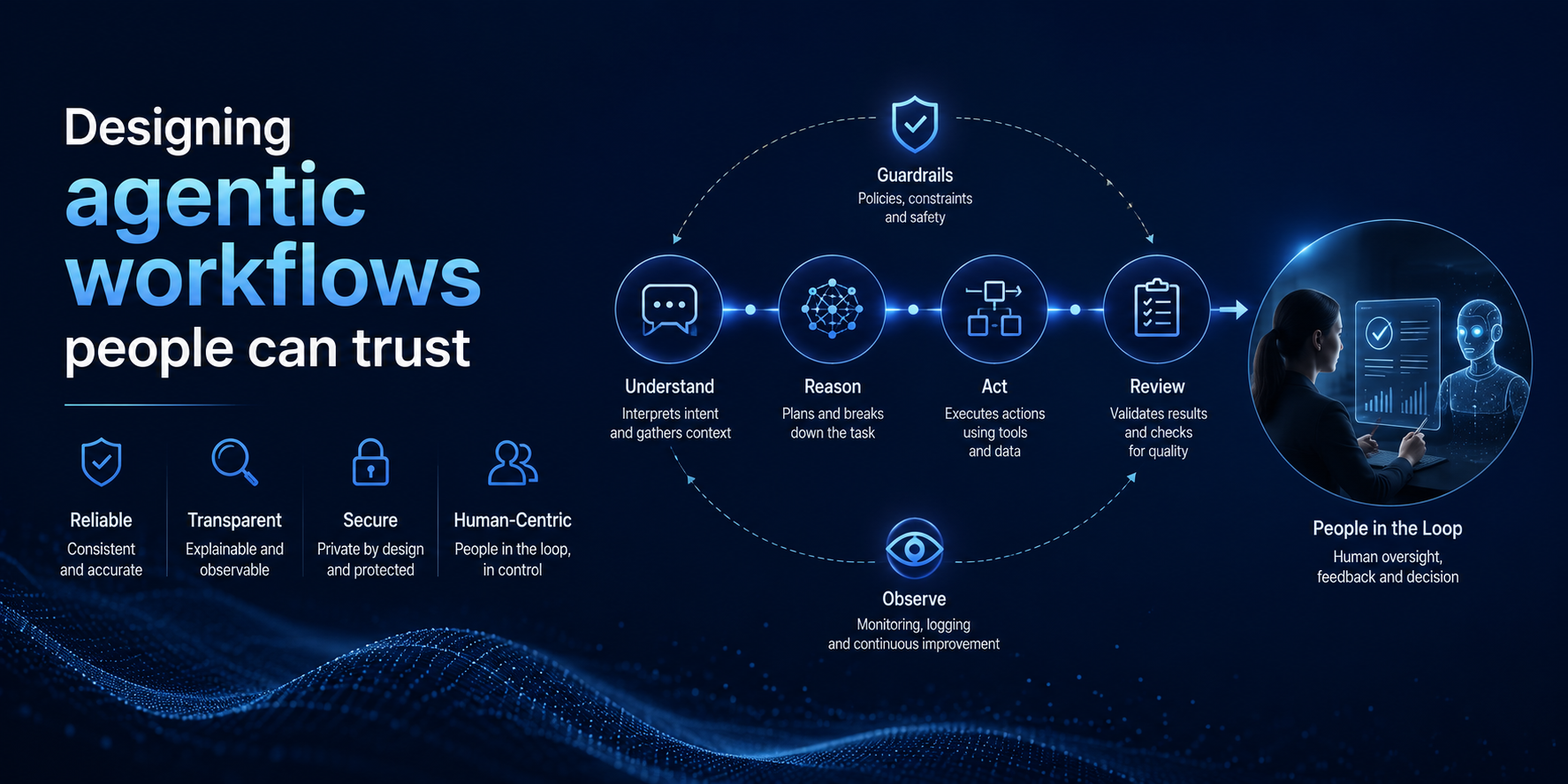
An agentic workflow is not simply a chatbot with a longer prompt. It is a bounded system that can interpret a goal, choose among actions, use tools, and recover when the environment does not behave as expected.
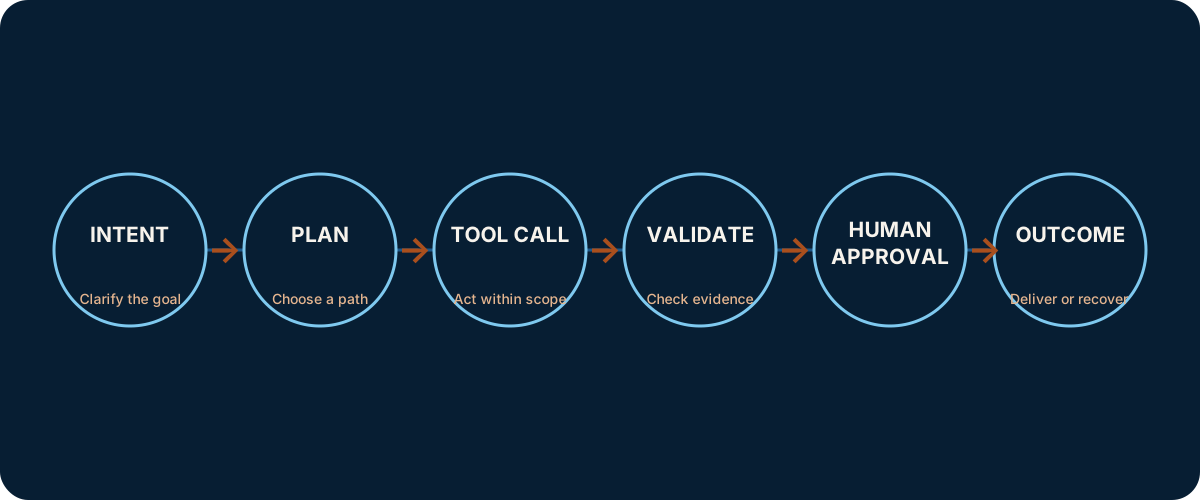
Bound the agent before expanding it
Define the allowed tools, data boundaries, approval points, failure states, and maximum cost or execution time. Reliability comes from designing the operating envelope, not from asking the model to “be careful.”
Make uncertainty visible
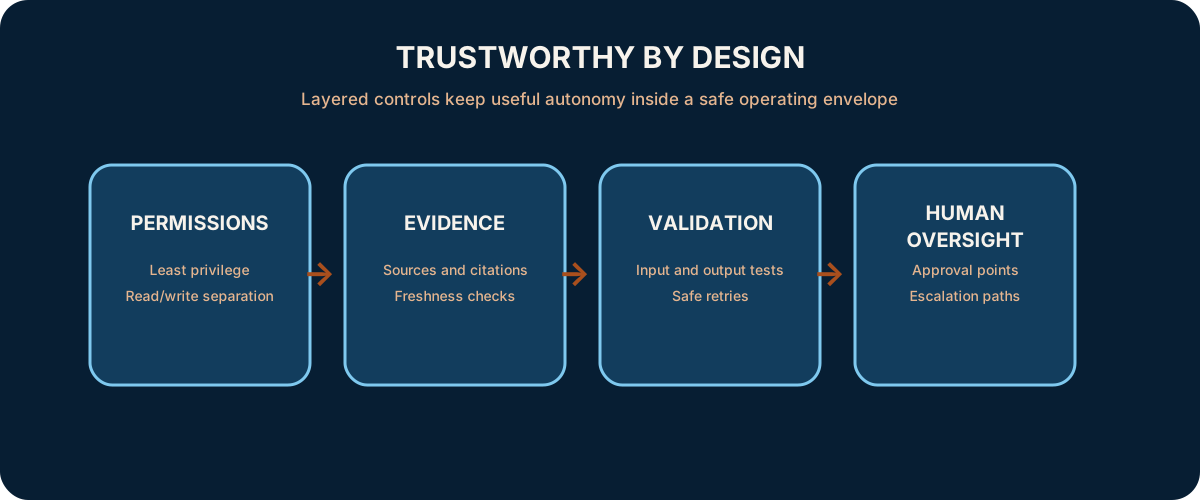
People need to know what the system attempted, what evidence it used, and where a human decision is required. Audit trails and clear escalation paths are part of the product experience.
Design permissions as product boundaries
Give each agent the smallest set of tools and permissions needed for its job. Separate read actions from write actions, validate inputs before execution, and require explicit confirmation before irreversible changes. These boundaries reduce blast radius when a prompt, tool, or integration behaves unexpectedly.
Build recovery into the happy path
A useful agent does not hide failure. It pauses when evidence is missing, retries only when a retry is safe, and explains what it needs from a person. Define timeouts, rate limits, fallback behaviour, and an audit record before expanding autonomy.
Evaluate the workflow, not only the answer
Measure task completion, tool selection, refusal behaviour, latency, cost, recovery from errors, and user confidence. A persuasive answer can still represent a failed workflow. Test normal, ambiguous, adversarial, permission-boundary, and no-tool scenarios so the system is judged on behaviour—not just polished demos.
NIST AI Risk Management Framework ↗