adoption · July 2026
Making AI adoption stick inside a real organization
Why capability building is a product problem—and how to create momentum without losing judgement.
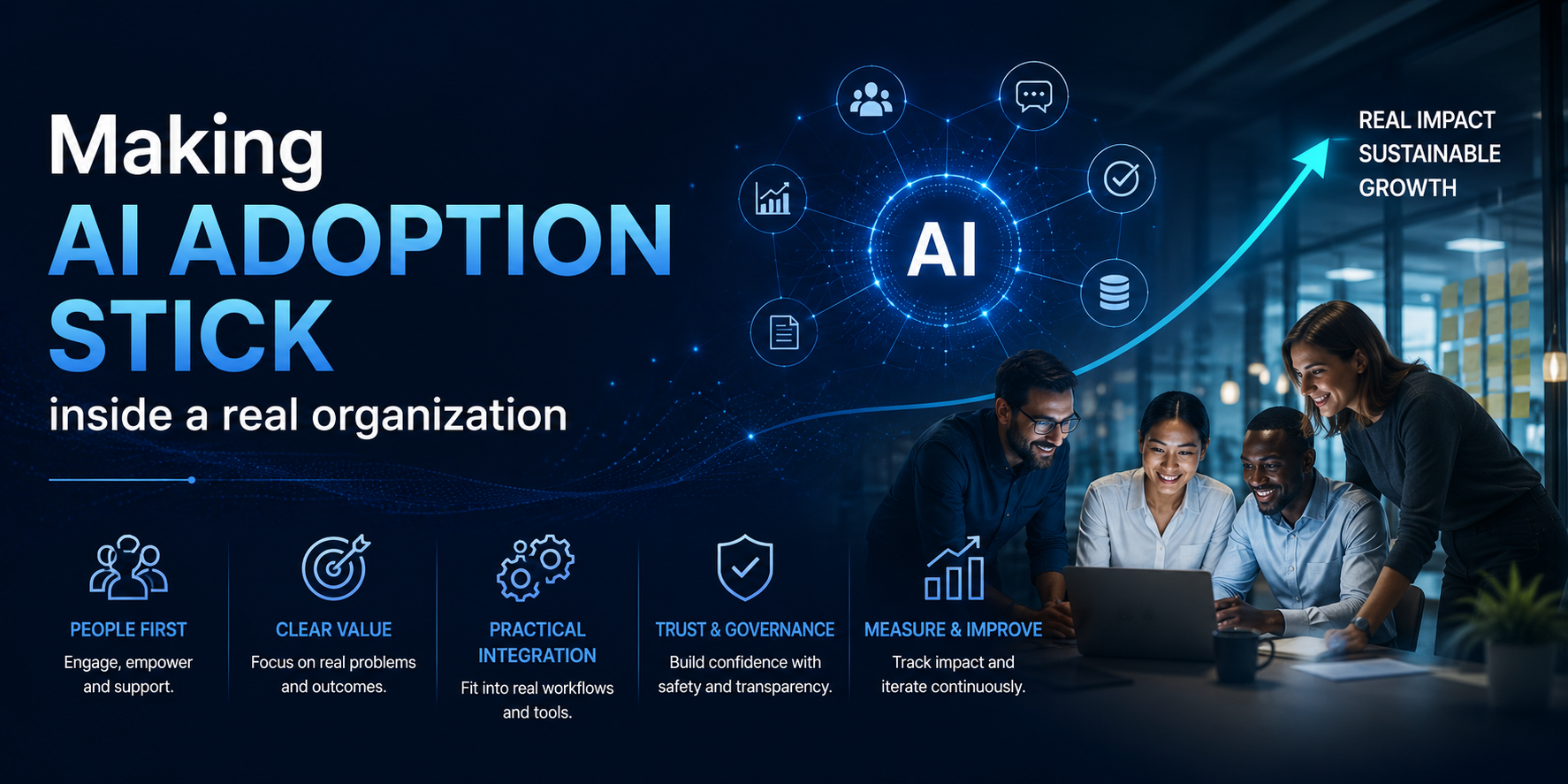
Tool access does not create capability. Sustainable adoption depends on whether people understand where AI helps, how to use it safely, and when human judgement must remain in charge.
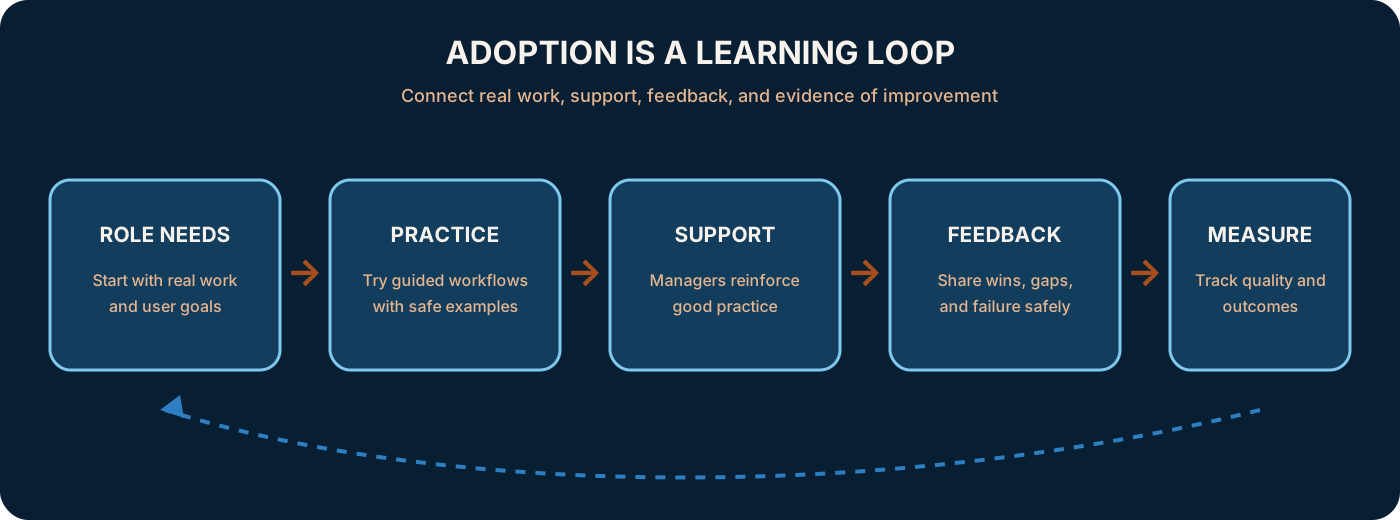
Start with roles and moments of work
Replace generic tool training with examples drawn from real responsibilities. Show how AI can support a task, what must be checked, and what information should never be entered.
Measure confidence and outcomes
Track adoption alongside quality, time saved, rework, user confidence, and incidents. Productivity gains that increase errors or remove accountability are not durable gains.
Give managers a role in the change
Managers turn training into everyday practice. Equip them with safe-use guidance, examples of good review, and a lightweight way to share lessons across teams. Recognition matters too: people are more likely to adopt a new workflow when effort and improvement are visible.
Create a safe path from experiment to standard practice
Start with a small set of high-value workflows, define what good looks like, and invite people to challenge the design. Promote an experiment only when privacy, security, quality, ownership, and support are clear. This creates momentum without turning every new tool into an uncontrolled rollout.
Make learning continuous
Teams need a safe way to share examples, ask questions, report failures, and update working practices as tools change. Workforce enablement is an ongoing operating capability, not a one-time launch event.