adoption · August 2026
Human-centred AI transformation: from adoption to human–agent work design
A practical guide to AI literacy, capability building, workforce redesign, trust calibration, worker voice, and responsible human–agent organizations.
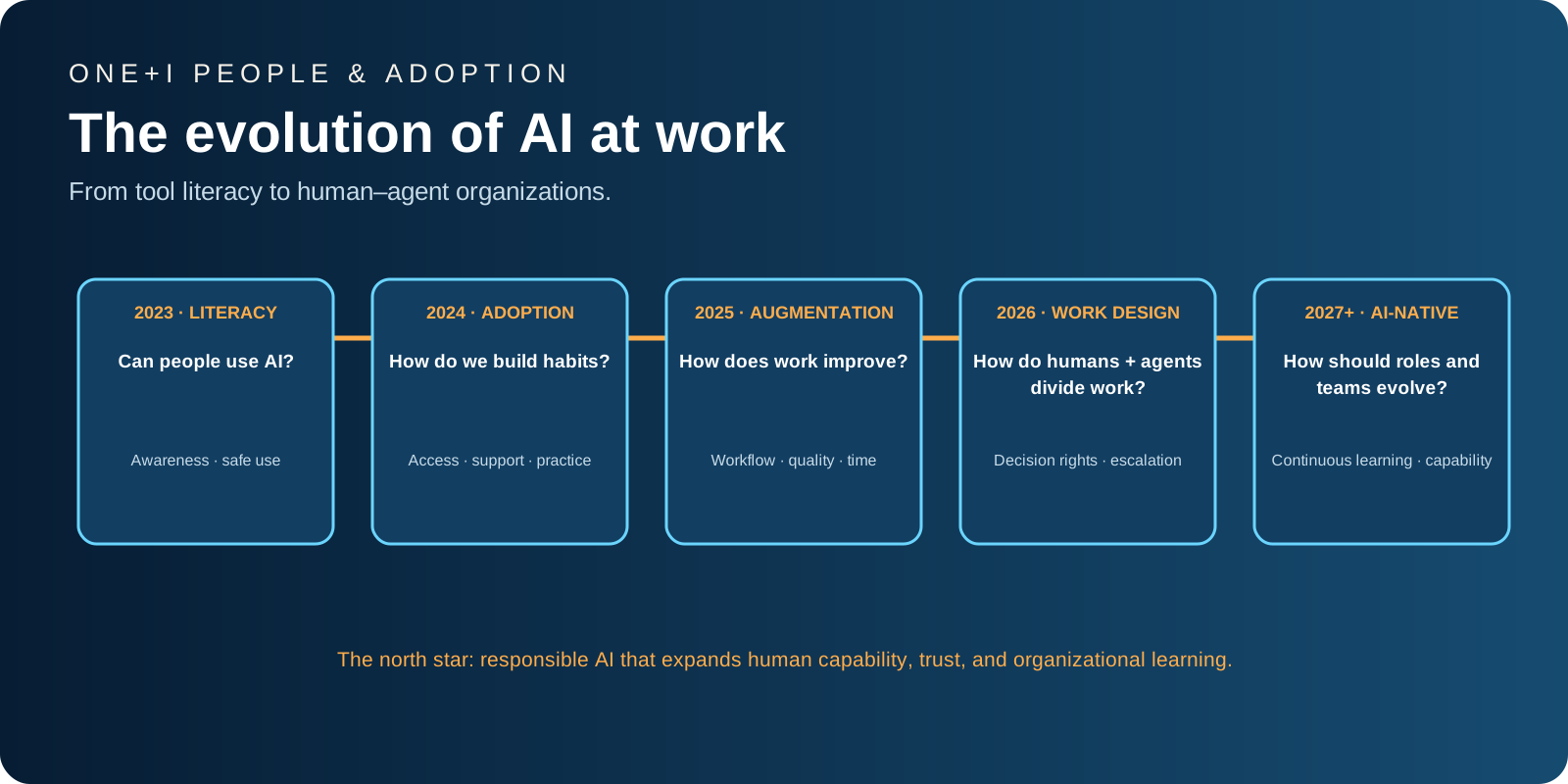
The first wave of workplace AI focused on access: teach employees to use a chatbot, provide a copilot, and measure activity. The next wave is more consequential. Organizations are redesigning work, decision rights, capabilities, and team structures so humans and increasingly autonomous systems can work together productively, responsibly, and sustainably.
The workplace journey: literacy, adoption, augmentation, redesign
| Stage | Core question | What changes | Leadership focus |
|---|---|---|---|
| AI literacy | Can employees use GenAI safely? | Awareness, basic skills, experimentation | Access, policy, early guidance |
| AI adoption | How do we build useful habits? | Usage, support, trust, feedback | Role-based enablement and measurement |
| AI augmentation | How can work improve? | Tasks, quality, speed, workflow fit | Human–AI collaboration and outcomes |
| Human–agent work design | How should work be divided? | Decision rights, handoffs, escalation | Autonomy, control, accountability |
| AI-native workforce | How should roles and teams evolve? | Careers, structures, continuous learning | Institutional capability and sustainable value |
1. Redesign work before choosing a tool
A job is a bundle of tasks, decisions, relationships, and responsibilities. AI rarely transforms every part of an occupation uniformly. Start with the outcome, map the workflow, identify where information is gathered and decisions are made, and then compare human and AI advantage. People may be better at ambiguity, empathy, accountability, negotiation, and value-sensitive judgment. AI may be better at scale, retrieval, monitoring, repetition, and pattern extraction.
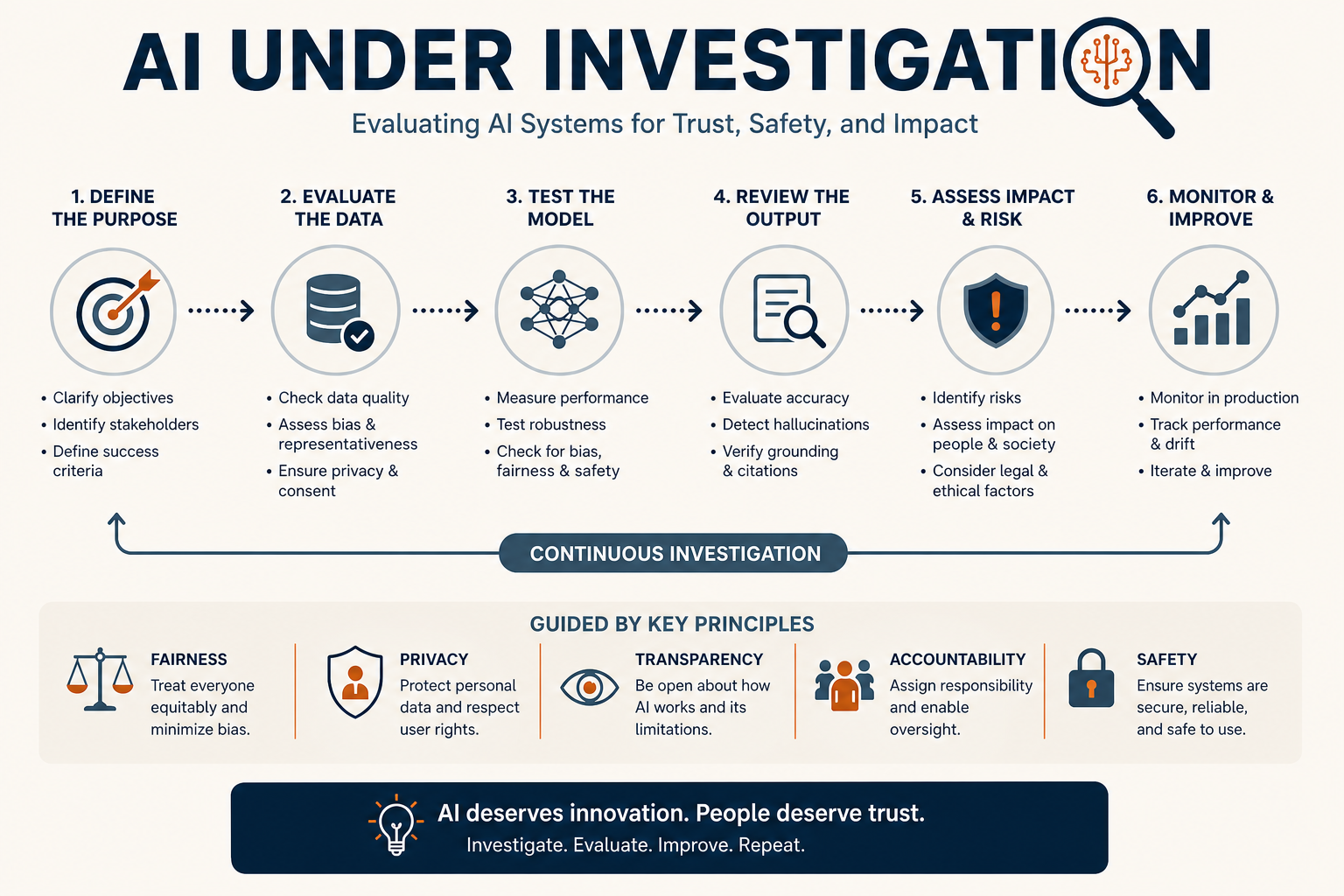
- Map the outcome: define what better means for the customer, employee, or business.
- Decompose the work: list tasks, decisions, dependencies, exceptions, and handoffs.
- Compare advantage: identify where speed, scale, judgment, empathy, or context matter.
- Choose a collaboration pattern: assist, recommend, delegate, supervise, or keep human-only.
- Design the controls: specify review, escalation, audit, reversibility, and shutdown paths.
2. Human–agent teams and the autonomy spectrum
A hybrid workforce may include employees, assistants, specialized agents, and autonomous workflows. The important design question is not whether to “deploy an agent,” but who assigns work, who checks it, who owns mistakes, when the agent escalates, and how performance is evaluated. A useful progression is: human executes with AI assistance → human and AI jointly produce an outcome → human delegates a bounded task → an agent executes while a human supervises exceptions → multiple agents coordinate under human governance.
Learn how to build bounded agent loops with tools, evidence, and human review ↗
3. AI literacy becomes AI fluency and agentic fluency
Prompt engineering is only one small part of workforce readiness. Employees need to frame problems, provide context, decompose work, delegate safely, verify outputs, recognize uncertainty, protect sensitive information, evaluate evidence, and know when human judgment is required. Managers and domain experts also need to inspect workflows, define success criteria, intervene, and coach others.

| Group | Capability emphasis |
|---|---|
| All employees | AI literacy, responsible use, verification, privacy, escalation |
| Knowledge workers | AI fluency, context engineering, workflow integration, quality checks |
| Domain experts | AI-assisted reasoning, validation, exception handling, domain judgment |
| Managers | Work redesign, delegation, human–agent team management, outcome measurement |
| Builders | Architecture, evaluation, safety, identity, observability, runtime controls |
| Risk, legal, compliance | Assurance, impact assessment, contestability, governance |
| Executives and boards | Portfolio strategy, operating model, economics, risk appetite |
4. Verification and calibrated trust
As AI becomes better at producing fluent answers, knowing whether an answer should be trusted becomes more valuable. The goal is not blind trust or blanket rejection; it is calibrated reliance. Employees need source verification, reasoning checks, uncertainty awareness, domain validation, bias recognition, and escalation judgment. For agents, people may not see every intermediate step, so systems must expose evidence, tool activity, confidence signals, approvals, and stop conditions.
- Low-risk, reversible work: AI can draft or execute with lightweight review.
- Material decisions: require evidence, a named approver, and a clear audit trail.
- High-impact or irreversible work: keep a human decision-maker in control and test the escalation path.
- Uncertain or novel cases: prefer abstention and clarification over confident improvisation.
5. Worker voice and co-design
Employees understand the real workflow: where exceptions occur, which data is unreliable, where tacit knowledge matters, and where customers expect empathy. Human-centred adoption therefore moves from technology → communication → training toward employee involvement → workflow discovery → co-design → experimentation → learning → scale. Use pilot groups, AI champions, communities of practice, frontline listening, and explicit feedback loops.
6. Responsible change and psychological safety
Employees are not only asking how to use a copilot. They are asking what happens to their job, whether AI will monitor them, whether expertise still matters, and whether they are training a system that replaces them. Responsible change explains why AI is introduced, what will change, what will not change, how work may evolve, what training is available, how decisions are made, and what safeguards protect people.
7. Preventing deskilling and protecting the talent pipeline
AI can improve short-term productivity while weakening long-term capability if people stop practicing critical skills. Risks include automation bias, cognitive offloading, loss of domain expertise, reduced critical thinking, and weaker junior development. Traditional expertise often grows through repetition, pattern recognition, feedback, and increasing judgment. If AI automates all entry-level practice, organizations may gain efficiency today while damaging tomorrow’s expert pipeline.
- Deliberate practice: reserve tasks where people must reason without immediate AI completion.
- AI-assisted apprenticeships: let early-career staff use AI with structured review and coaching.
- Simulations: practice rare, high-risk, or ambiguous cases before production exposure.
- Rotations and mentoring: preserve domain context and relationship skills that tools cannot replace.
- Skill checkpoints: measure judgment, verification, and explanation—not only output volume.
8. Skills-based workforce planning
The useful unit of analysis is increasingly job → tasks → skills → AI exposure → redesigned role. A task-based view supports skills adjacency, internal mobility, reskilling pathways, and realistic role redesign. It also avoids simplistic predictions that an entire occupation will disappear. Workforce plans should show which tasks are automated, augmented, preserved for practice, or redesigned around new human responsibilities.
9. Responsible algorithmic management
AI used on employees—recruitment, scheduling, productivity scoring, performance evaluation, promotion recommendations, monitoring, or workforce optimization—requires a separate human-impact lens. Ask whether people can contest a decision, whether the data is appropriate, whether monitoring changes behavior, whether a human can override the system, and whether affected workers understand how the system is used.
10. Measure human performance, not just usage
A dashboard that reports logins, prompts, or hours saved is incomplete. Track the chain from usage to task completion, quality, rework, human intervention, skill growth, trust, employee experience, and business outcome. A useful framing is: AI value = productivity + quality + capability + innovation + employee experience − risk. Usage is an input; durable capability and responsible outcomes are the result.
A practical implementation playbook
- Choose one meaningful workflow: anchor the program in a real outcome and a real user group.
- Run a workforce impact assessment: map tasks, roles, decision rights, skills, risks, and support needs.
- Co-design with employees: include frontline staff, managers, domain experts, risk partners, and builders.
- Start with bounded autonomy: make review, escalation, identity, and auditability visible from day one.
- Build role-based learning: combine literacy, practice, coaching, verification, and supervision skills.
- Measure quality and experience: pair productivity with rework, confidence, fairness, learning, and outcomes.
- Scale by evidence: share patterns through a community of practice and invest where learning compounds.
The north star: capability, not consumption
The strongest organizations will not be those with the most AI licenses or the highest prompt volume. They will be the organizations that turn individual experimentation into institutional learning, redesign work without removing accountability, and give people the skills to direct, verify, and improve intelligent systems. Human-centred AI transformation is ultimately a workforce, operating-model, and trust strategy.
References and further reading
Microsoft Work Trend Index 2026 — AI, human agency, and the opportunity for every organization ↗
Research on embedding AI in everyday work, institutional learning, and the emerging human–agent operating model.
Microsoft — How Frontier Firms are rebuilding the operating model ↗
A view of how organizations may redesign work, roles, and decision-making around agents.
Microsoft Work Trend Index 2025 — The Frontier Firm is born ↗
Introduces human–agent teams and the emerging role of employees who manage digital labor.
PwC AI Jobs Barometer 2026 ↗
Evidence on skill change, productivity, judgment, leadership, and AI exposure across occupations.
ILO — Generative AI and jobs ↗
Research emphasizing task transformation, exposure differences, and the importance of job quality.
The Human-AI Substitution Principle ↗
Research on task allocation, human–AI substitution, and how hybrid organizations may change.
Agentic AI in Industry: Adoption Level and Deployment Barriers ↗
Examines the gap between capable agent demonstrations and reliable deployment in organizations.
EU AI Act — AI literacy obligations ↗
A regulatory reference for appropriate AI literacy among providers, deployers, and affected staff.
One+i — Making AI adoption stick ↗
A practical companion on role-based learning, support, feedback, measurement, and durable adoption.